
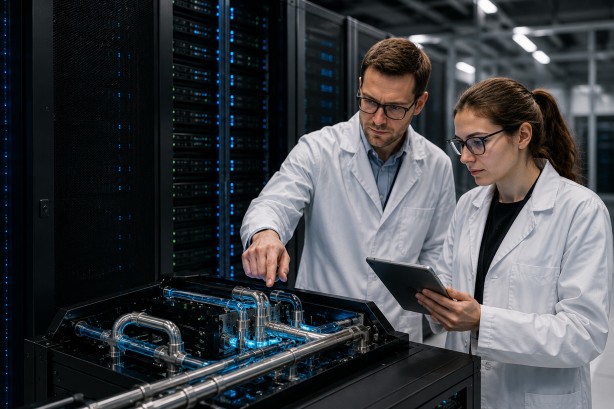
As the demand for artificial intelligence continues to rise, researchers in Switzerland are pioneering new cooling technologies to enhance the energy and water efficiency of AI data centers. At the forefront of this innovation are scientists from the Swiss Federal Institute of Technology in Lausanne (EPFL) and start-up company Corintis, who are developing liquid-cooling systems tailored to the specific thermal characteristics of individual computer chips. This cutting-edge technology is anticipated to cut down cooling energy consumption by approximately 20% while also reducing water usage compared to traditional methods.
A significant focus of the research is the re-utilization of waste heat produced by AI servers. Instead of dissipating this heat into the atmosphere, the researchers are exploring ways to integrate it into district heating systems during the colder months, or alternatively, to convert part of it back into electricity when the weather is warmer. This dual approach not only seeks to enhance the efficiency of AI data centers but also aims to contribute to sustainable energy practices.
Liquid cooling is increasingly seen as a crucial component in managing the heat output of AI processors, which generate significantly more heat than conventional computing systems. This advanced cooling method is becoming essential in the effort to manage the environmental footprint of AI technologies. Despite the promising advancements in cooling, experts caution that these improvements alone will not completely address the environmental challenges posed by AI. The rapid growth in AI services continues to push electricity and water consumption to higher levels worldwide, underscoring the need for a comprehensive approach to sustainability.
While the strides in cooling technology are commendable, they highlight the broader issue of managing AI’s ecological impact. The ongoing research and development at institutions like EPFL and Corintis are crucial steps in addressing these challenges, but they also illustrate the need for continued innovation and adaptation in an ever-evolving technological landscape. As AI continues to expand, so too must the strategies to mitigate its environmental consequences.