
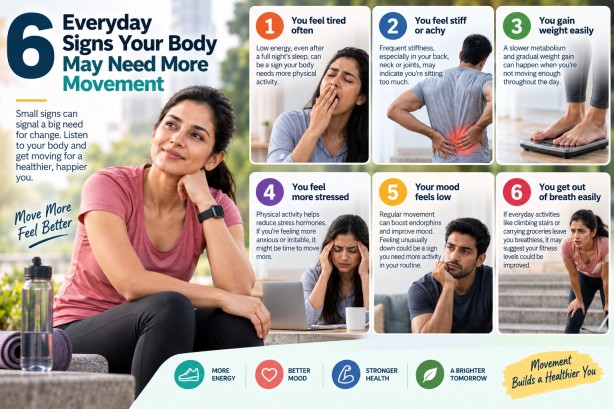
While pain is often seen as a signal for movement, there are subtler signs that your body may need more activity. Many people spend their days sitting at desks, driving, or otherwise inactive, which can gradually impact flexibility, strength, balance, and energy without immediate discomfort. These subtle hints can appear during everyday activities, encouraging more movement before inactivity disrupts daily routines.
Stiffness after long periods of sitting, particularly in the back, hips, shoulders, or legs, is a common sign that more regular movement is needed. Taking brief breaks to move throughout the day can help keep joints comfortable and prevent prolonged inactivity. Feeling unusually tired after simple tasks like climbing stairs or walking short distances can also signal a need to boost fitness levels. Gradually increasing physical activity can enhance stamina and ease everyday movements.
Sluggishness, both physically and mentally, often follows extended periods without movement. Sitting for hours can make it challenging to remain alert and energetic. Incorporating short walks, stretching sessions, or quick movement breaks can help interrupt sedentary habits. Additionally, a decline in balance, such as difficulty standing on one leg or navigating stairs, may require attention. Regular exercise, including walking and balance activities, can improve stability and coordination.
Poor posture, such as slumping forward at a desk, can result from weak or underutilized muscles due to prolonged sitting. Strengthening the back, legs, and core, along with taking regular standing breaks, can aid in better posture and movement. If everyday tasks like bending, squatting, or getting up from a chair become more challenging, it may not simply be a consequence of aging. Lack of movement can decrease strength and flexibility, so gradually incorporating activity can help maintain independence and mobility.
To enhance daily movement, there is no need for long gym sessions. Simple strategies like taking short walking breaks, stretching after sitting, using stairs, and adding basic strength or balance exercises can be effective. Consistency is key, as regular small movements are often more sustainable than occasional intense workouts. However, if changes in movement come with persistent stiffness, weakness, numbness, dizziness, or pain, consulting a healthcare professional is advised. Listening to your body’s early signals and gradually increasing activity can support strength, mobility, energy, and overall well-being at any age.